
Future of private Art Collections
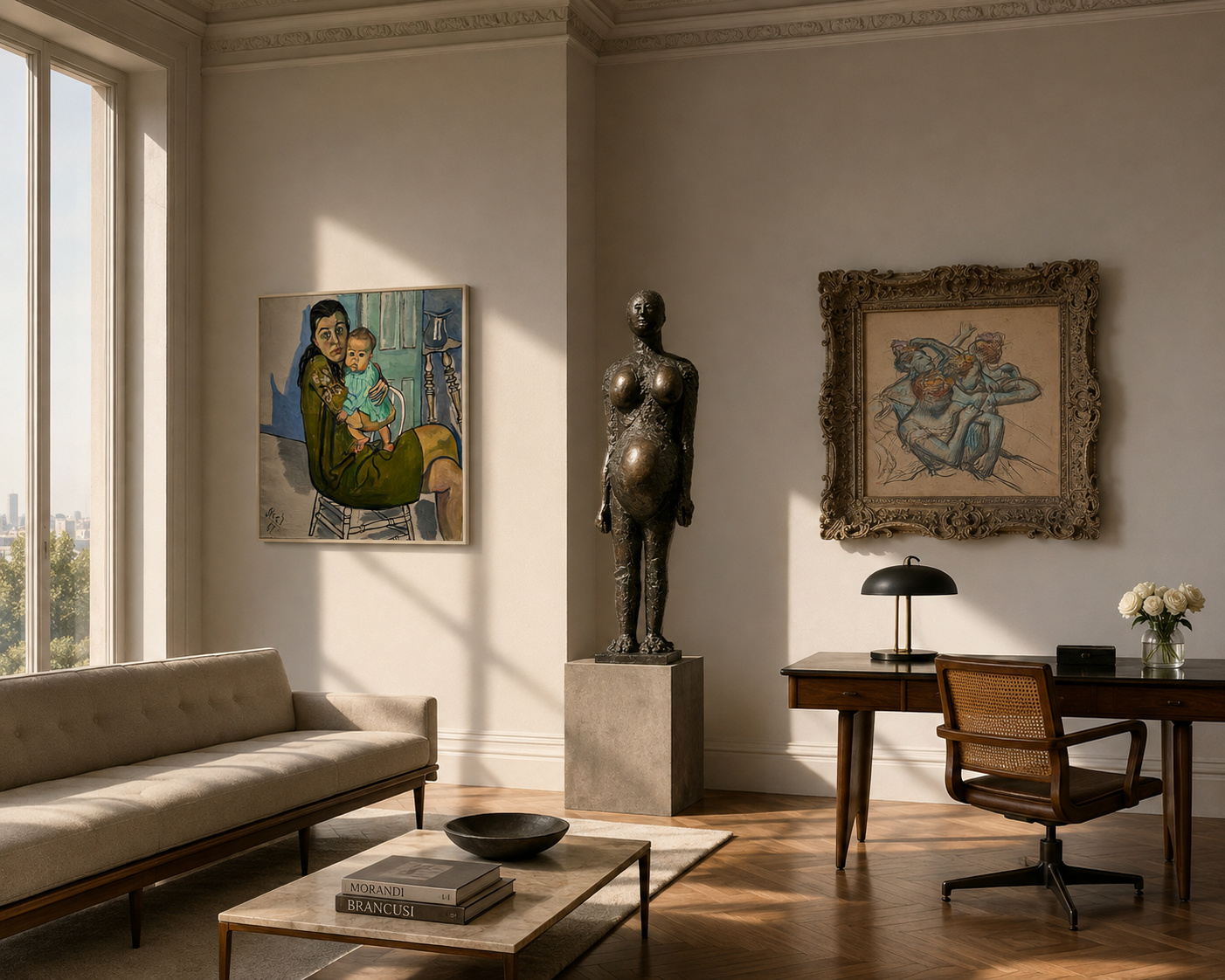
Can dispersal itself be curated?
By Maryam Horri, Founder, Honar Advisory
Deloitte Private and ArtTactic estimate that approximately $992 billion in art and collectibles will change hands over the coming decade. The scale of that transfer has understandably produced a great deal of discussion about the art market: what will be sold, what will return to auction, what younger generations will keep, and how tastes may change.
There is another question I find more interesting.
What, if anything, should survive of a collection when the collection itself does not?
The art world is very good at documenting provenance. Auction houses understand the value of distinguished ownership and often celebrate it. Museums research it. Important single-owner sales may produce catalogues that become records of both the works and the person who assembled them.
But provenance principally follows the individual work.
A collection contains something else.
The Value Between the Objects
Through years of engagement with private collections, what has always interested me is not simply what someone owns, rather why these particular choices were made, and how they came together.
Collectors make choices over long periods of time. They return to certain artists or ideas. They recognize some things before others do. They support artists when support matters. Sometimes they collect in an area everyone is watching; sometimes they pay sustained attention to one almost no one else sees.
These choices are part of the cultural life of art.
Artists make the work, but art does not enter culture in isolation. Galleries, collectors, curators, critics and institutions all participate in what becomes visible, supported, discussed and eventually remembered.
This can become particularly interesting when a collection develops around a geography, culture or period undergoing profound change. A collector may spend decades following artists from a region transformed by migration or political rupture. Another may concentrate on emerging artists long before there is market consensus around them. Another may, through years of collecting, preserve an unusually complete view of a generation or movement almost without having intended to do so.
The collection then becomes more than a record of ownership. It becomes a record of attention.
And this is where market value can be misleading.
Cultural importance and market value do not always arrive at the same time.
An important and highly valued collection will usually receive attention when it comes to market. There may be scholarship, exhibitions, catalogues and extensive documentation. Its history has economic as well as cultural value, and there is every reason to preserve it.
But what about the quieter collection?
What about the person who spent thirty years paying attention to an artistic community that museums were not systematically collecting, or to artists from a region that was largely outside the international market? The individual works may have modest values. The collection, considered as a whole, may nevertheless contain something remarkable.
When those works are dispersed, their provenance can remain perfectly intact.
What may disappear is the collector's argument: why these artists, why these works, why together, and why at that particular moment.
Can Dispersal Itself Be Curated?
The answer is not that important collections should simply be kept together.
That ignores reality.
Families and circumstances change. Heirs have their own interests. Collections can become extraordinarily valuable. Estates have obligations. Some works should be sold. Some belong in museums. Others may have far more life ahead of them in the hands of another collector.
But keeping everything together and dispersing everything without distinction are not the only possibilities.
Perhaps we need to think more creatively about what happens between them.
A small group of works might contain the essential idea of a much larger collection and deserve to remain together. A collector's history with certain artists might be documented before the works move on. Photographs, correspondence, acquisition histories or conversations might preserve information that otherwise exists only in memory.
And placement need not always mean the most obvious institution.
Depending on the collection and the works themselves, a university, school, hospital, healthcare setting or other public institution may offer a meaningful next life. A group of works might be divided among several institutions while retaining an acknowledged relationship to the collection from which it came. Other works might be sold, allowing the family to meet practical or financial objectives, while a smaller nucleus continues the collector's original idea.
There is no formula for this, nor should there be.
The point is to understand what has been created before deciding how to take it apart.
That requires looking beyond the values assigned to individual objects and asking whether there are relationships, histories, concentrations or ideas within the collection that merit some form of continuity.
Sometimes there will be nothing further to preserve.
Sometimes there may be something extraordinarily valuable that has never been valued at all.
Another Form of Stewardship
The coming transfer of art wealth will create enormous activity in the market. Sale, inheritance, philanthropy and institutional placement will all be part of it.
But perhaps this moment also gives collectors and families an opportunity to broaden the idea of stewardship.
Stewardship does not have to end when ownership ends.
The final decisions surrounding a collection can themselves reflect the intelligence with which it was formed: understanding what should remain together and what need not; what should be sold and what might be given; where particular works might continue to matter; and what knowledge should survive even when the objects move elsewhere.
A collection does not have to remain physically intact to have a coherent afterlife.
The question is not how to prevent dispersal. It is whether dispersal itself can be an act of stewardship.
Maryam Horri is the founder of Honar Advisory, providing independent counsel to collectors, families, estates, and fiduciaries considering the future of important artworks and collections. Retained solely by the parties whose interests it represents, Honar advises before a course of action has been fixed.
